

One of the hardest things for COPD patients is often not knowing when their breathing will suddenly become restricted. There are many people who struggle even to walk a few steps during the day, cannot sleep comfortably at night, or feel anxious the moment they see a staircase. That is exactly why COPD balloon treatment has recently become a more frequently discussed topic.
Does COPD Balloon Treatment Work?
This question cannot be answered in just one word. Yes, it can work for some patients. Especially if there is a narrowing or blockage in the airways that can be relieved through an interventional procedure, patients may feel a noticeable improvement in breathing after the treatment. It may become possible to feel less tired in daily life, experience less chest tightness, and gain a certain increase in mobility.
However, the same results are not achieved in every COPD patient. This is because the severity of the disease, the extent of lung damage, other accompanying health problems, and the patient’s general condition all directly affect the outcome. A method that provides major benefit for one person may have a more limited effect in another. Therefore, it is not correct to see balloon treatment as a miracle, but it is also not accurate to think of it as completely ineffective. The real determining factor is whether the patient is truly suitable for the procedure.
What Are the Risks of Balloon Treatment?
Like any medical procedure, this treatment also has risks. They may be small or large, but they do exist. After the procedure, temporary coughing, increased sputum, short-term changes in shortness of breath, irritation, or mild bleeding may occur. In some patients, the possibility of infection is also taken into consideration. In rarer cases, airway damage or more serious lung-related complications may arise.
What matters here is that these risks are not the same for everyone. Details such as age, the stage of COPD, the presence of heart and vascular diseases, the patient’s respiratory capacity, and the center where the procedure is performed can all change the picture. This is also why the doctor carries out a thorough evaluation before the procedure. The assessment focuses not only on the possible benefits of the treatment but also on its potential drawbacks. In some patients, the benefits outweigh the risks, while in others, the risk calculation must be made much more carefully.
Is Blowing Up a Balloon Beneficial for the Lungs?
This question is asked very often. Among the public, there is a belief that blowing up a balloon opens the lungs and strengthens them. In some healthy individuals, or when used in a controlled way as part of certain breathing exercises, it may have some beneficial aspects. But when COPD is involved, the issue is not that simple.
In COPD, the problem is not only taking in air but also having difficulty exhaling it. For this reason, blowing up a balloon may cause fatigue, chest pressure, dizziness, or increased shortness of breath in some patients rather than providing benefit. Therefore, it should not be seen as a safe method that anyone can simply try at home on their own. Controlled breathing exercises recommended by a doctor or a respiratory physiotherapist are generally preferred instead. In short, blowing up a balloon may be beneficial for some people, but it is not a method that is automatically recommended for COPD patients.
How Are the Lungs Cleaned with a Balloon?
In fact, the expression used here is somewhat misleading. Medically speaking, there is no such procedure as “cleaning the lungs with a balloon.” What people usually mean by this is opening up the lungs, making it easier to clear sputum, or improving breathing. However, the purpose of balloon treatment is not to clean the lungs directly, but in some cases to help mechanically relieve narrowing in the airway.
When lung cleaning is mentioned, several different things are usually involved. Medications, breathing exercises, methods that help clear sputum, rehabilitation programs, and certain bronchoscopic procedures may all be evaluated together. In other words, a balloon procedure alone is not an intervention that cleans the inside of the lungs in the way many people imagine. It is more accurately described as a procedure intended to improve airflow.
At What Stage Is COPD Balloon Treatment Performed?
It is not really possible to explain this based on stage alone. In COPD treatment, the fact that the disease is mild, moderate, or advanced is not considered a sufficient criterion by itself. The intensity of symptoms, how much the patient struggles in daily life, the frequency of exacerbations, imaging findings, and respiratory test results are all evaluated together.
In patients with mild disease, the main approaches usually include medication, quitting smoking, regular follow-up, and breathing exercises. Balloon treatment, on the other hand, is more likely to be considered in patients whose symptoms continue despite medication, who have marked shortness of breath, and in whom a problem is identified in the airway that can be corrected through an interventional procedure. For this reason, giving a one-sentence answer such as “it is performed at this stage” would not be accurate. A more correct answer would be this: it is performed in the right patient, at the right time.
Which Is Better: A Stent or a Balloon?
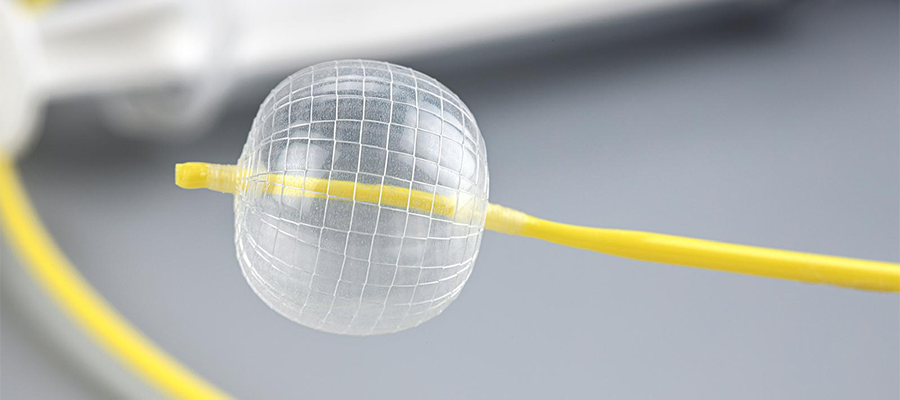
Although these two methods are often seen as alternatives to one another, they are not always direct competitors. Balloon treatment is mainly used as an intervention to help open a narrowed area, while in some situations a stent may be preferred to help keep the opened area open.
Which method is better depends entirely on the problem the patient has. In some people, balloon treatment may be sufficient, while in others the narrowing may recur and a stent may then be considered. On the other hand, stents also come with their own specific problems. Issues such as displacement, irritation, secretion buildup, and infection can occur. Therefore, the real question is not “which is better,” but rather “which is more appropriate in which situation.” The deciding factors are the patient’s bronchial structure and overall clinical condition.
How Long Does Balloon Treatment Take?
The answer to this question is not limited to the technical duration of the procedure itself. Patients are often curious about how many minutes are spent in the procedure room, but the preparation and follow-up process are also important parts of the overall treatment. The procedure itself may not take very long. Even so, in COPD patients the entire process is carried out in a more controlled manner.
The patient is evaluated beforehand. During the procedure, respiratory status is monitored closely. Afterwards, a certain observation period may also be necessary. Some patients are discharged on the same day, while others may be kept under observation for a longer time. So the duration depends not only on how long the procedure itself takes, but also on how the patient recovers afterwards.
How Many Days Does the Balloon Stay Inflated?
This question is usually asked because it is confused with other balloon treatments. However, in bronchoscopic balloon procedures related to COPD, the balloon is not a device that remains inside the body for days or weeks. It is inflated in a controlled way in a specific area during the procedure, and once the intended widening is achieved, it is deflated and removed.
So this should not be thought of like a gastric balloon that stays inside the body for a long period. The purpose is to temporarily widen the relevant area during the procedure. Afterwards, the balloon does not remain in the body. If the patient experiences any benefit, it is not because the balloon stays inside, but because of the relief provided by the procedure itself. It is important to understand this distinction, because many people initially imagine the logic of the treatment incorrectly.
What Happens If COPD Is Left Untreated?
When COPD is left untreated, it generally tends to progress over time. Shortness of breath that is initially felt only while walking may later begin to occur even at rest. Coughing may increase, sputum may become more abundant, and infections may become more frequent. The person gradually becomes tired more easily, and the range of daily activities begins to shrink.
After a while, climbing stairs, walking short distances, speaking for long periods, or even doing simple household tasks can become difficult. Oxygen levels in the blood may fall, leading to many additional problems, from fatigue to sleep disturbances. The heart may also be affected by this condition. In short, untreated COPD does not remain just a breathing disorder; it can turn into a progressive condition that disrupts the entire structure of daily life. That is why early diagnosis, regular follow-up, and proper treatment are extremely important.
What Are the New Treatment Methods for COPD?
In recent years, in addition to conventional medications, more targeted interventional methods have also come into discussion in COPD treatment. In particular, bronchoscopic procedures, volume reduction approaches used in selected patients, valve applications, advanced respiratory support methods, and personalized rehabilitation programs have started to attract more attention.
However, a new treatment does not mean a treatment that is suitable for everyone. The type of disease, the extent of lung damage, accompanying illnesses, and the patient’s general condition all determine which option should be prioritized. In some patients, new methods can truly produce promising results. In others, standard treatments may still be the most appropriate approach. For this reason, even though interest in new treatments has increased, the final decision is still made through an individualized evaluation.